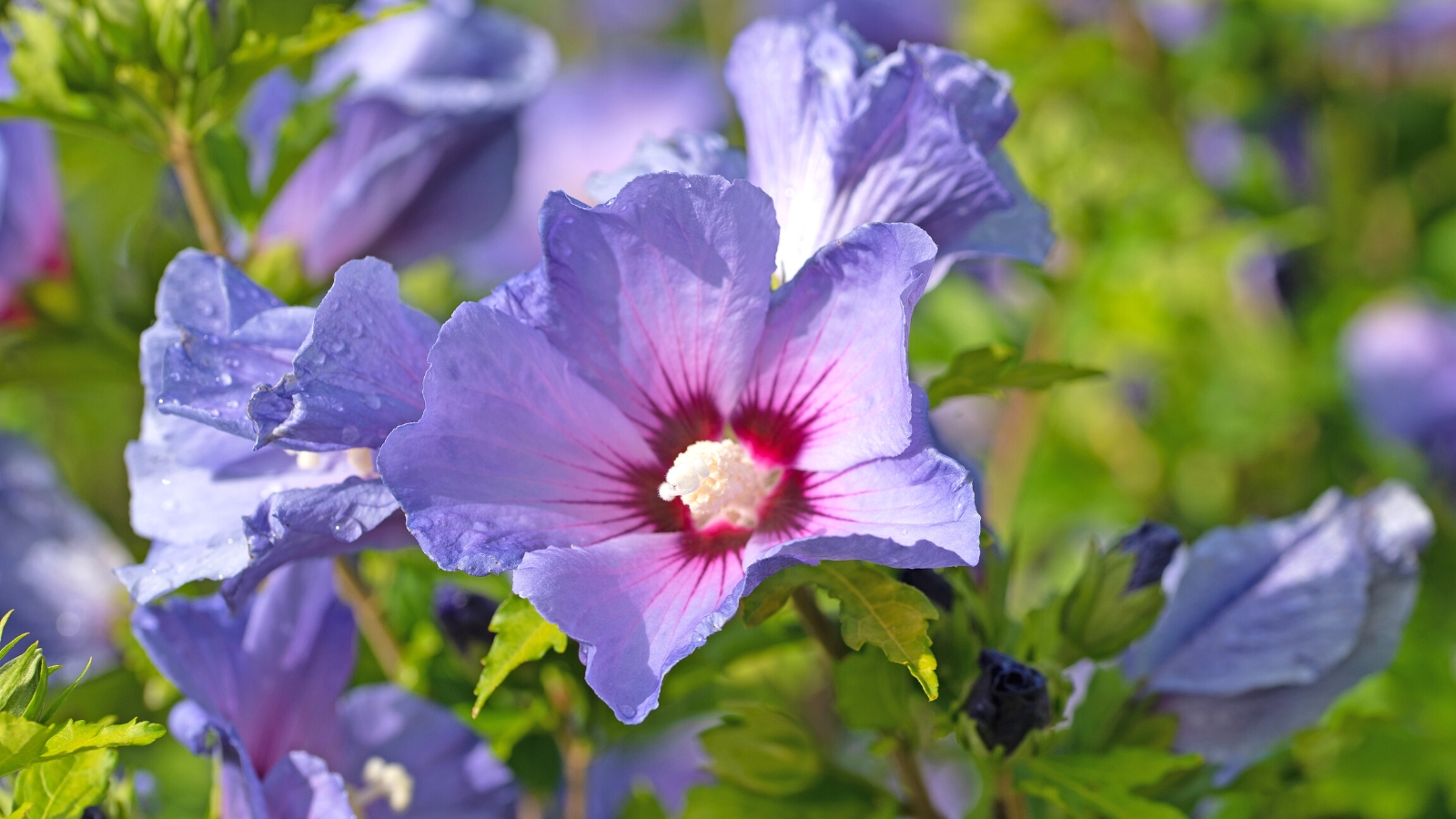
Where: The exact origin of Hibiscus rosa-sinensis is unknown, although it has been cultivated in China, Japan and the Pacific islands for a long time. Two white-flowered species, Hibiscus arnottianus and Hibiscus waimeae, are believed to be native to Hawaii.
Facts: Hibiscus buds and flowers are edible, with a lemony taste, and are rich in vitamin C. They can be used in chutneys, soups, salads, curries, jams and jellies. Dried, they are also used in herbal tea. The Chinese hibiscus is the floral emblem of Haiti and Malaysia. Hibiscus is high in antioxidants and offers many potential benefits. In particular, it may help promote weight loss, reduce the growth of bacteria and cancer cells, and support the health of the heart and liver. Hibiscus is available as an extract or, more often, a tea. Tropical hibiscus flowers typically grow 4-6 inches across in shades of orange, yellow, red, pink, and multicolor. Purple and white forms are less common. The Misty pink variety is one of the rarest hibiscus plants, meaning it will be tough to find and plant in your garden.